

Picture Frame Hanging Hacks: What Works, What Does Not
Quick answer
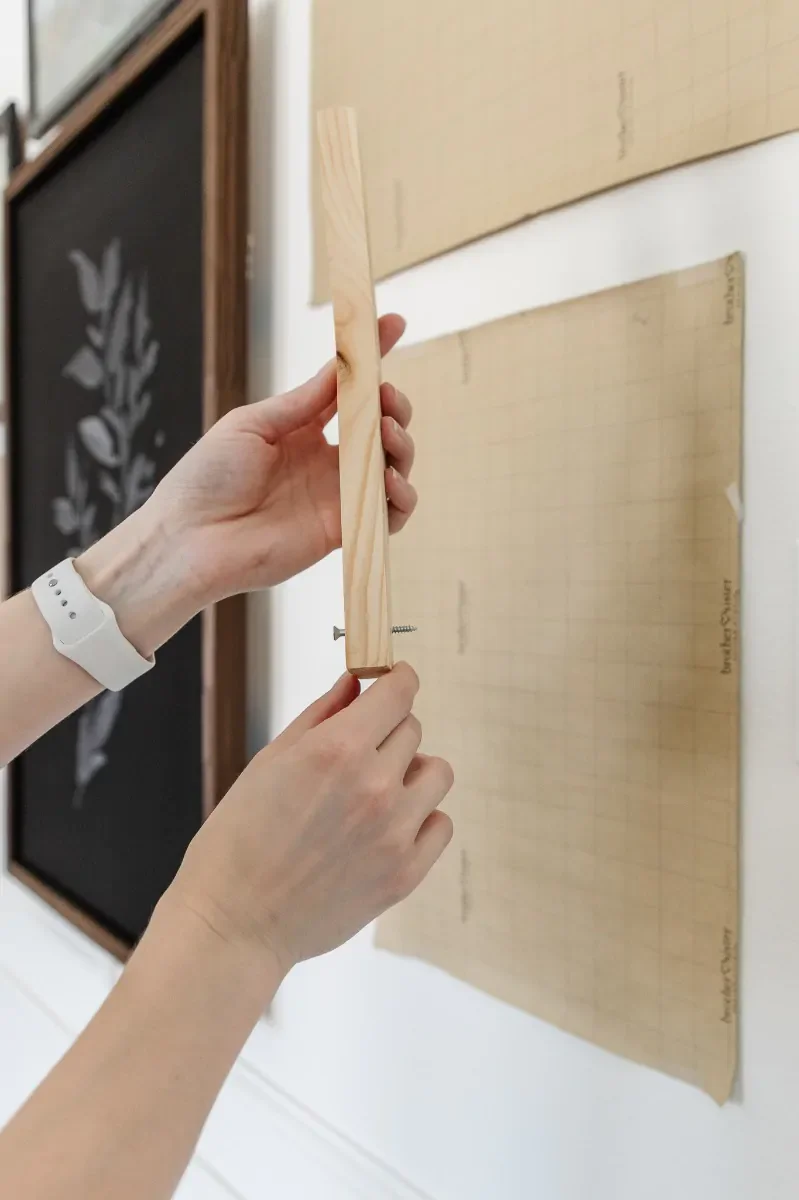
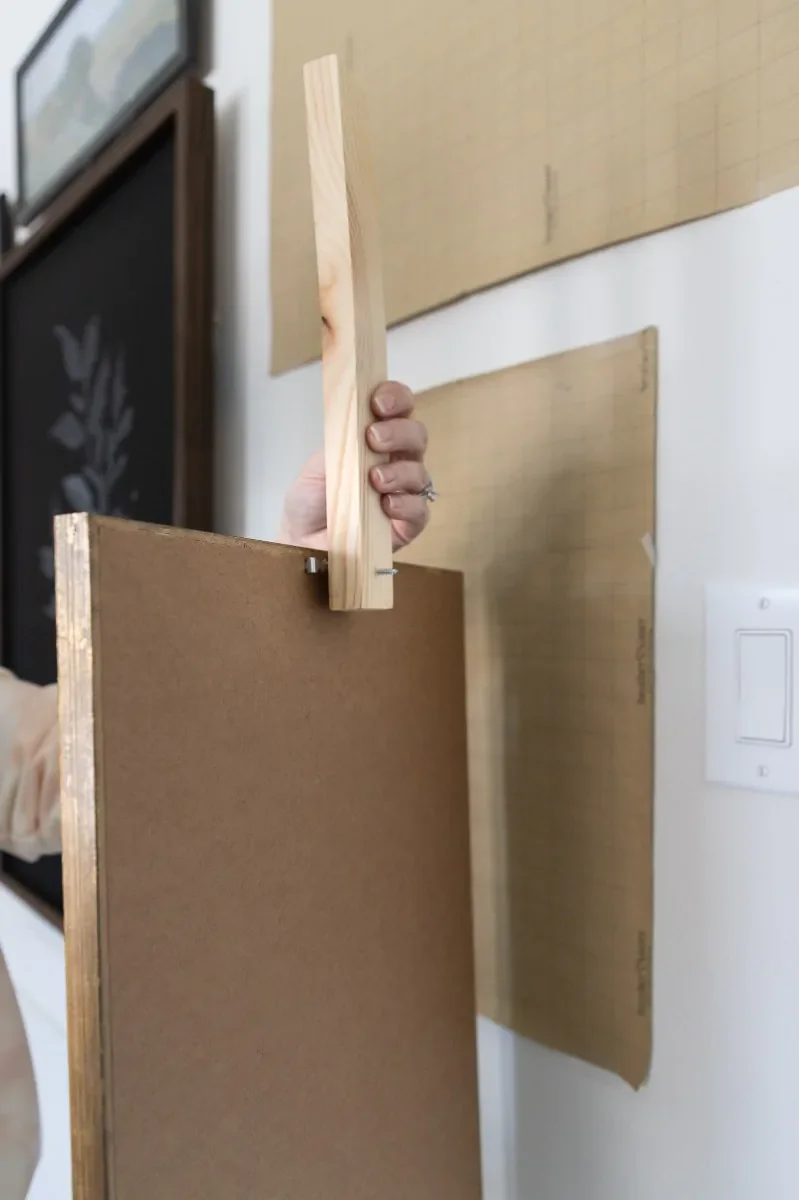
The most reliable picture frame hanging hacks: mark hole positions with painter's tape before drilling, use a tape measure plus a level for any frame over 12 inches wide, hang at 57 inches from floor to the center of the frame for gallery height, use a French cleat for anything over 25 pounds, and pre-position frames on the floor before committing to the wall. Renter-safe options like adhesive strips work for frames under five pounds on smooth painted walls, but they fail on textured paint or heavier pieces. The full ranking of pro tricks and where each one belongs follows below.
Picture Frame Hanging Hacks: The Pro Tricks That Actually Work
Want the complete how-to-hang-a-picture guide? See our comprehensive picture hanging guide covering height, hardware, layout, gallery walls, and heavy frames. This page is the deep-dive on which clever shortcuts actually work and which ones damage walls.
Hanging a frame straight, level, and at the right height takes ten minutes once you know the tricks. Here are the ones that pros use, ranked by how often they actually save time.
Some "hacks" for hanging picture frames are clever solutions that actually work. Others ruin walls, fail at the worst possible moment, or look unprofessional from day one. This guide separates the good ones from the bad ones, with weight ratings and use cases for each.
Picture Frame Hanging Tips That Actually Work
Adhesive picture-hanging strips
Brand: 3M Command Strips, Scotch Velcro hangers, equivalent.
How they work: Two interlocking strips. One side adheres to the wall, the other to the back of the frame. The frame snaps onto the wall strips and can be removed without damage.
Weight rating: Single strip pairs hold 4 to 8 pounds depending on the model. Use multiple pairs for heavier frames (rated up to 16 pounds for a two-pair set).
When this works:
- Renters who cannot use nails
- Small to medium frames (under 16x20)
- Walls with a smooth painted surface
- Temporary or rotating displays
When this fails:
- Textured walls (the strip cannot fully adhere)
- Heavy frames (the strip eventually peels under weight)
- Hot, humid rooms (bathrooms, kitchens) where the adhesive softens
- Walls painted within the last month (the paint has not fully cured)
The trick is preparation. Wipe the wall with rubbing alcohol and let it dry before applying. Press the strips firmly for 30 seconds. Wait an hour before hanging the frame.
J-hooks and picture rails
How they work: A horizontal moulding strip mounted high on the wall (the picture rail) holds J-shaped hooks that drop down on cords or wires. The frames hang from the cords. Common in pre-war homes and classical interiors.
Weight rating: A picture rail with proper hardware can hold 30+ pounds per cord.
When this works:
- Apartments with existing picture rail moulding
- Frequent rotation of artwork (move the cord, no wall holes)
- Creating a gallery aesthetic in any room
- Walls where you do not want any visible holes
When this fails:
- Without a picture rail (you need the rail installed first)
- For minimalist modern interiors (the look is traditional)
If your home does not have picture rail moulding, you can install one at the top of any wall. The moulding takes about an afternoon to install and gives you flexible hanging for life.
Wire wall systems (gallery rails)
Brand: STAS, Walker Display, Newly, similar.
How they work: A horizontal bar mounts at the top of the wall. Vertical cables drop from the bar with adjustable picture hooks. Frames hang from the hooks at any height. Multiple hooks per cable for stacked frames.
Weight rating: Heavy. Commercial-grade systems hold 40+ pounds per cable.
When this works:
- Permanent installations where you want to rearrange often
- Galleries, offices, conference rooms
- Long walls where multiple frames hang in sequence
When this fails:
- Short walls (the bar is overkill)
- Single-frame installations (the system is more than you need)
This is the professional gallery solution. Expensive (a 6-foot system runs 200 to 500 dollars) but elegant and infinitely flexible.
Nail-free monkey hooks
Brand: Hercules Hooks, Monkey Hooks, similar.
How they work: A curved metal hook that pierces drywall at an angle and creates a stable hanging point without a nail. The hook hides behind the frame.
Weight rating: 35 to 50 pounds depending on model.
When this works:
- Renters in drywall apartments (the hook hole is small enough that it fills with paint)
- Heavy frames in drywall without a stud nearby
- Quick installations where you do not want to drill
When this fails:
- Plaster walls (the hook does not penetrate cleanly)
- Wood-paneled walls (does not pierce wood)
- Brick or stone (impossible)
Drywall only. The trade-off is a small angled hole that needs spackle and paint when removed.
Stud-mounted screws
How they work: A long screw driven directly into a wall stud holds significantly more weight than any drywall-only mounting. Find the stud with a stud finder, drill a pilot hole, drive in a heavy-duty screw.
Weight rating: 50+ pounds easily, with the right screw and stud.
When this works:
- Heavy frames (over 25 pounds)
- Shadow boxes
- Mirrors
- Anything you cannot afford to have fall
When this fails:
- When a stud is not in the right location for your frame
- Stud finders are not perfect; pre-drill carefully and listen for resistance
For anything heavy, find a stud and screw into it. Drywall anchors are a compromise; studs are the real answer.
The hanging hacks that fail
Toothpaste as wall-marking
The hack: Smear toothpaste on the back of the frame's hardware, press it against the wall, and use the smudge as a guide for where to drill.
Why it fails: Toothpaste leaves a residue that picks up dust over time. The mark is approximate, not precise. Pencil and a measuring tape work better and leave no trace.
The fix: Use a small piece of masking tape on the wall instead. Mark precisely with a pencil. Remove the tape after drilling.
Hot glue gun for frames
The hack: Hot glue is "removable" and "leaves no marks."
Why it fails: Hot glue leaves marks on painted walls when removed. It can also pull paint off and take chunks of drywall surface. Frames glued to walls cannot be repositioned without rework.
The fix: Use Command Strips for renter-friendly hanging. They are designed for this.
Wax sticker dots
The hack: Small wax dots stick to the wall and hold light frames in place.
Why it fails: Wax dots leave grease marks on the wall that remain even after washing. They support very little weight and slip in warm rooms.
The fix: Adhesive picture-hanging strips work for the same use case and remove cleanly.
Pushpins as picture hangers
The hack: A pushpin or thumbtack can hold a small frame.
Why it fails: Pushpins are not rated for weight. They angle wrong over time and let the frame slide. They can pull out and take wall paint with them.
The fix: A small finishing nail driven at a slight downward angle holds 5 pounds reliably. For renters, use a single Command Strip pair on a small frame.
Strong magnets behind drywall
The hack: Heavy neodymium magnets on either side of a thin wall theoretically hold a frame without any wall mark.
Why it fails: Drywall is too thick (typically 5/8 inch). Even very strong magnets do not transmit enough force through that thickness to hold a meaningful weight.
The fix: Stud-mounted screws or French cleats for heavy frames.
Velcro cable ties
The hack: Industrial velcro cable ties as picture hanging hardware.
Why it fails: Cable ties are not rated for shear load (the kind of force a hanging frame applies). They eventually slip or pull free of any adhesive backing.
The fix: Use the velcro picture-hanging strips designed for this purpose.
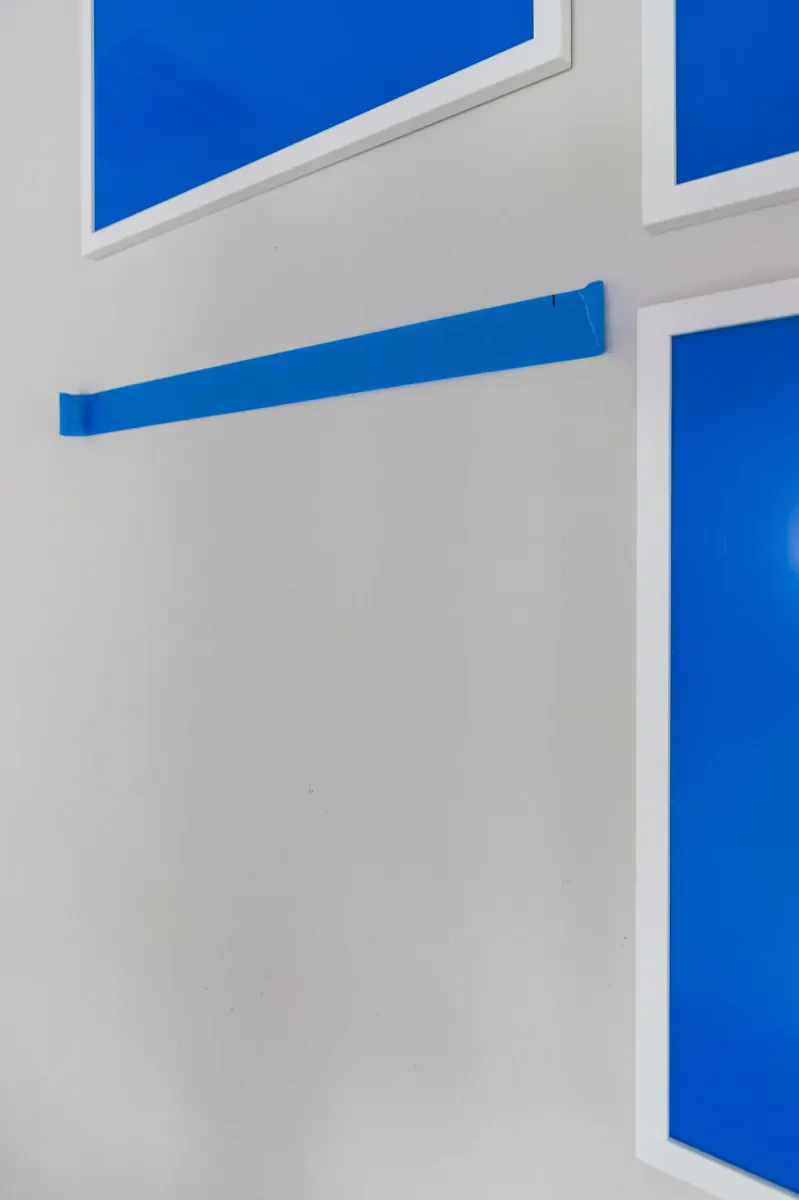
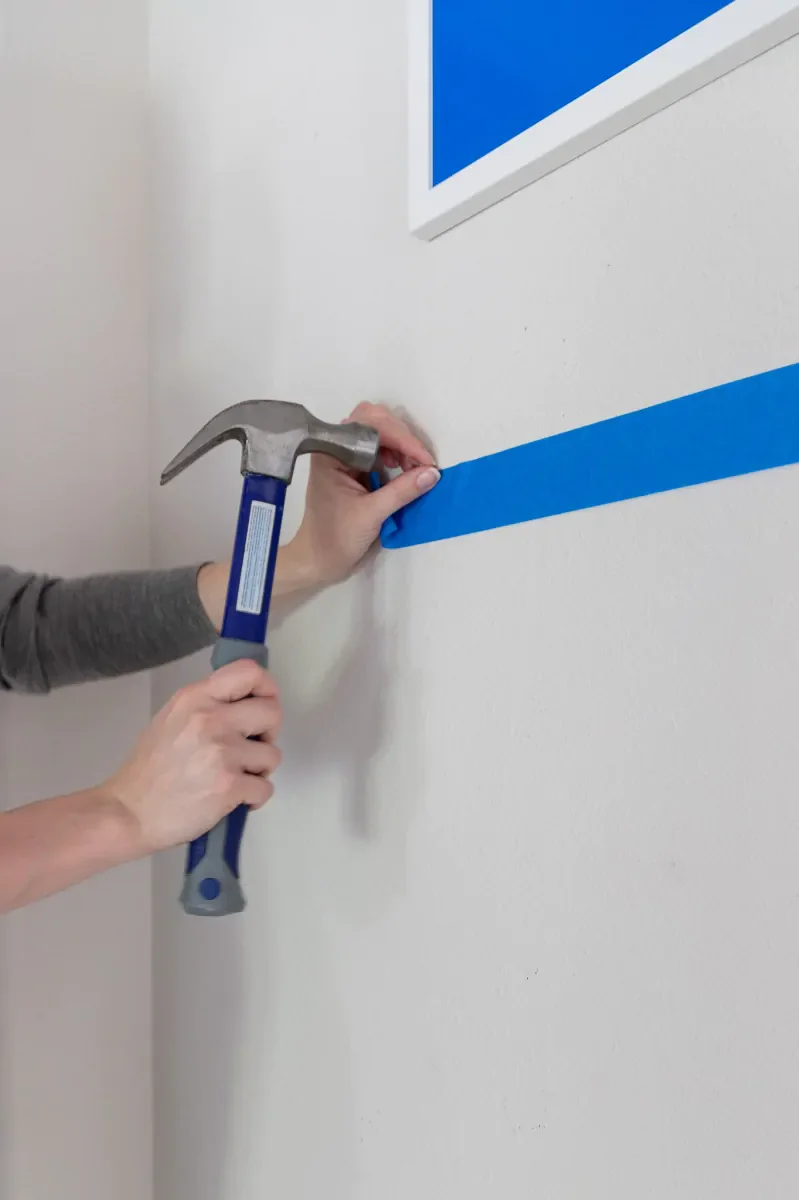
Painters tape as a leveling guide
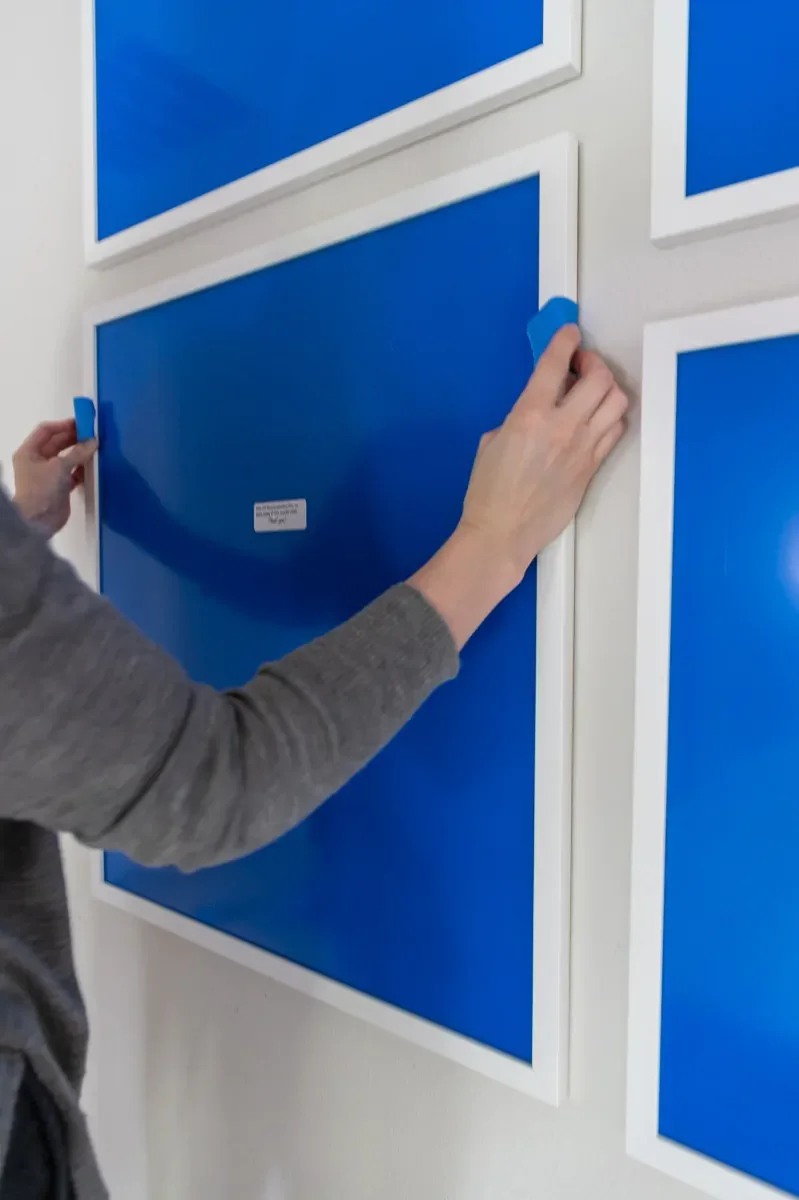
The hack: Run a strip of painters tape across the wall to mark the level for a row of frames.
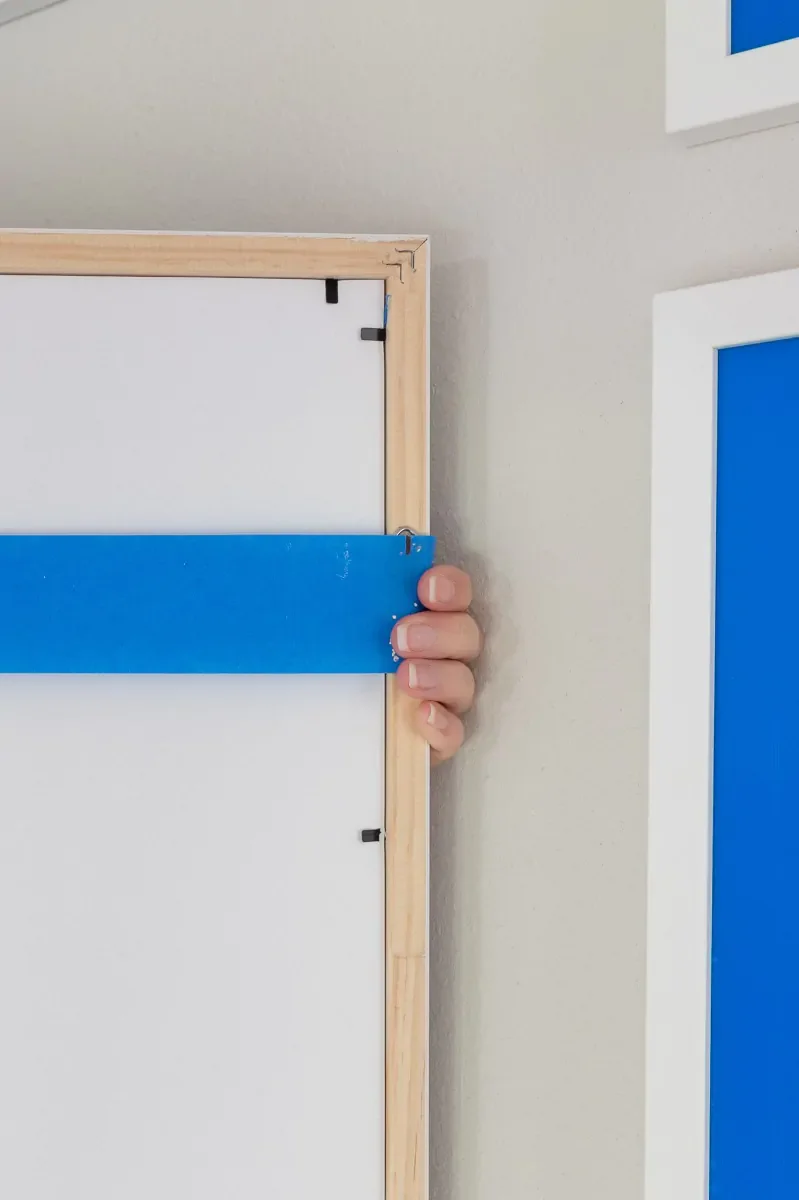
Why it works (this is the rare good hack): Painters tape removes cleanly, does not damage paint, and gives a perfectly straight reference line for a row of frames. Mark the hanging points on the tape before drilling.
This is the one "hack" that is genuinely useful. The tape comes off without residue and the line is more accurate than using a level for each frame separately.
A pro process for hanging straight
Independent of which hardware you use, a frame hangs straight when the math is right.
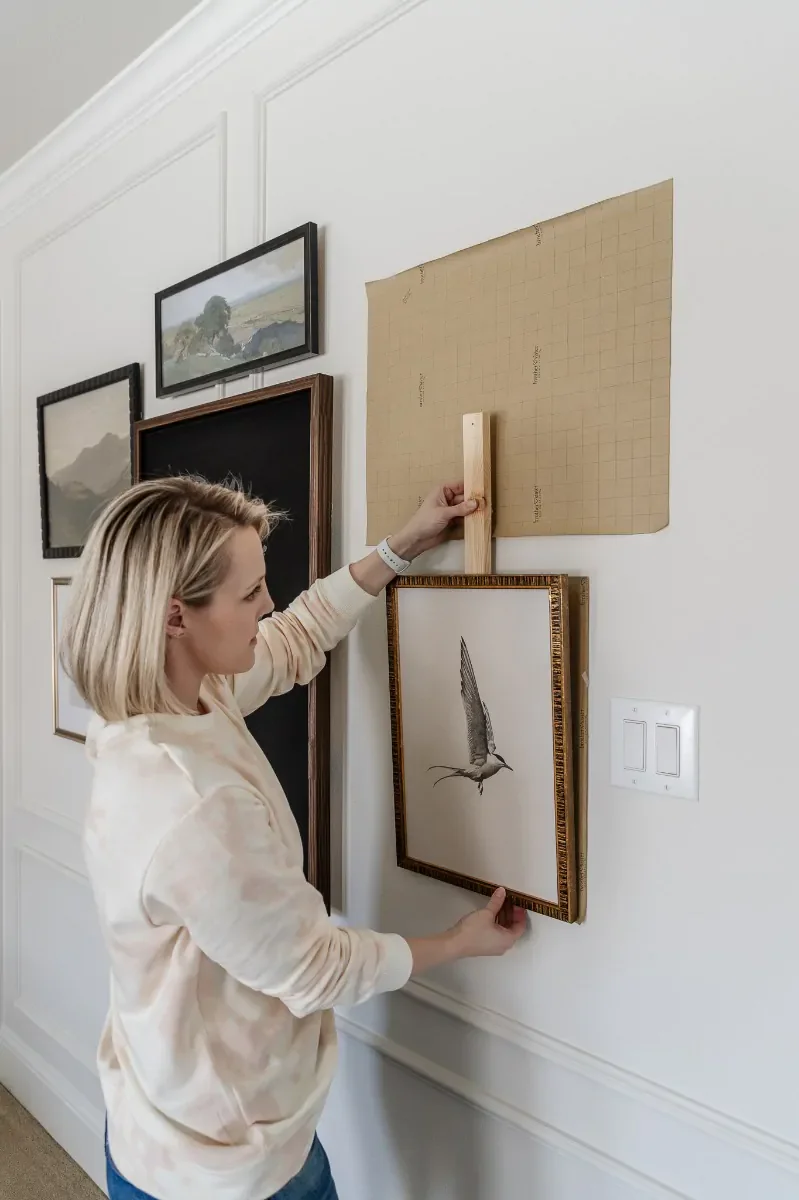
- Decide where the center of the frame should be on the wall.
- Mark that center point with a small pencil dot.
- Measure the distance from the top of the frame to the wall hook contact point (the peak of the wire, the back of a sawtooth, the slot of a two-point hanger).
- From the pencil dot, measure UP by half the frame's height MINUS the distance from step 3.
- That is where the wall hook goes.
Example: a 16x20 frame with picture wire that peaks 2 inches below the top. The center of the frame should be at 60 inches from the floor. Half the frame height is 10 inches. Subtract the 2-inch peak: 8 inches above center. So the wall hook goes at 60 + 8 = 68 inches from the floor.
This sounds complicated. Do it once and it makes sense forever.
Frequently asked questions
Can I hang a heavy frame on drywall without finding a stud?
Yes, with toggle bolts or heavy-duty drywall anchors rated for the weight. They create a larger hole than a regular nail but distribute the load across more drywall. For frames over 25 pounds, prefer studs if possible.
How do I find a stud?
Use a stud finder. The cheaper magnetic types find the screws holding the drywall to the studs (and tell you the stud is there). The electronic types detect the density change of the wood through the drywall. Both work; the electronic ones are more reliable.
Will Command Strips hold a shadow box?
Single pairs hold 4 to 8 pounds. Most shadow boxes are over 8 pounds. Use multiple pairs (a 4-pair set holds 16 pounds) or upgrade to French cleats for safety.
Can I hang frames from drop ceiling tiles?
Not without rework. Drop ceilings are not load-bearing. Frames in offices with drop ceilings must hang from picture rails or wall-mounted gallery systems.
What about adhesive on textured walls?
Adhesive picture strips need a smooth surface to bond. On textured walls (orange peel, knockdown, popcorn), the adhesive contacts only the high points and fails quickly. Stud finder + nail or French cleat are better options.
What we ship
Every frame we build ships with the appropriate hanging hardware for its size and weight: D-rings with picture wire for medium frames, French cleats for heavy frames or shadow boxes. You attach the frame-side hardware to your empty frame and supply the wall-side mounting (hooks, anchors, screws) based on your wall type.
If you are uncertain about the right wall hardware for your frame's weight and your wall type, the hardware store can help. Bring the frame's total weight and a description of your wall, and most associates will point to the right anchors.
The goal is for the frame to hang where you want it, level, for as long as you want it there. The right hardware makes that easy. The wrong hardware makes it hard.