

Recipe Card Shadow Box: A Keepsake Project Guide
Quick answer
A recipe card shadow box mounts the original handwritten card on an acid-free backing behind framer's grade acrylic, often paired with a photograph of the cook or a small object that calls back the dish. The shadow box does not need to be deep: one inch is plenty for a card on its own, two inches if you are adding a small dimensional object like a measuring spoon. Mount the card with archival photo corners or paper hinges, never glue or tape, so the writing is preserved and the card is fully reversible. The full project guide follows below.
Recipe Card Shadow Box: Preserving the Recipe in Her Handwriting
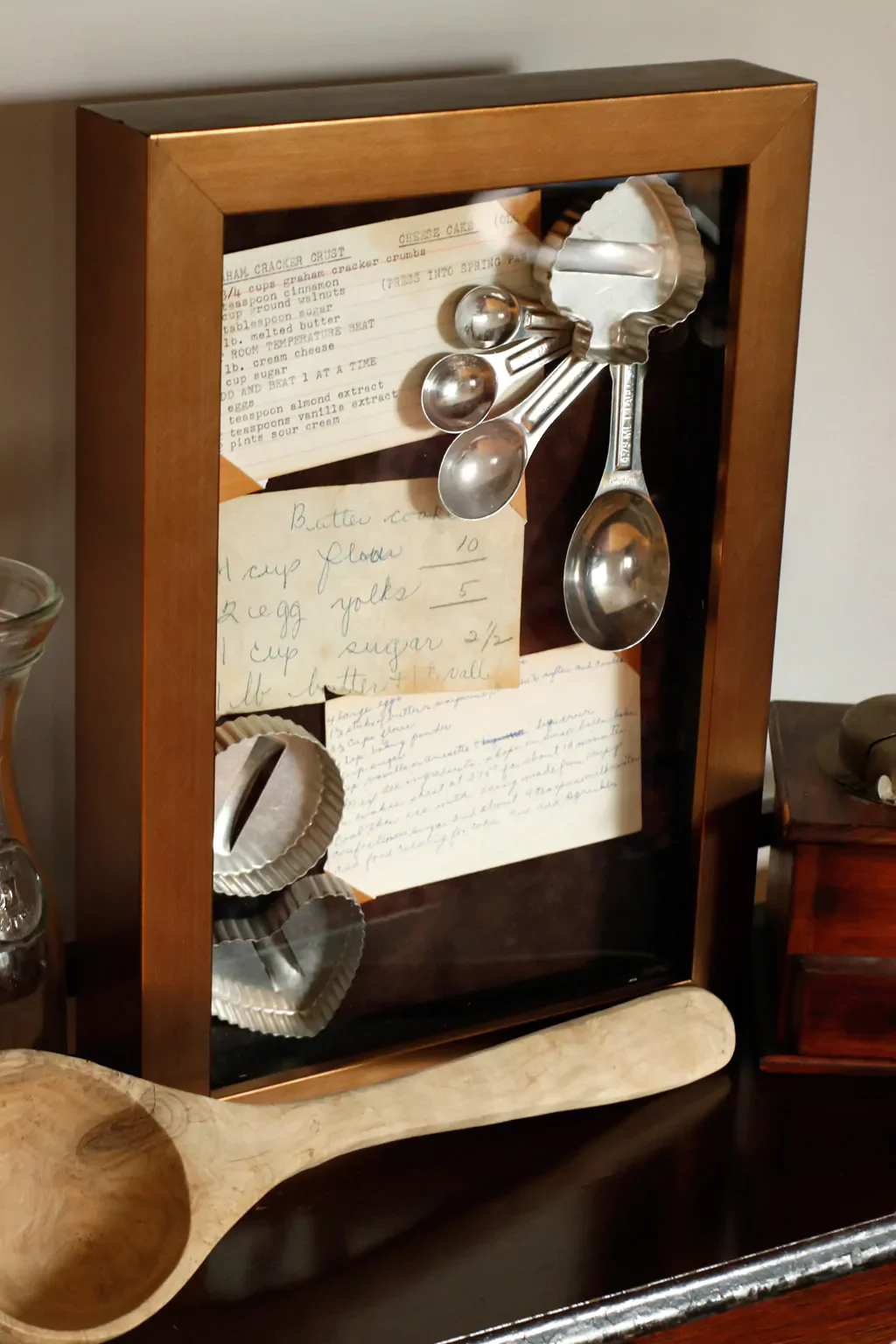
A grandmother's recipe card, mounted in a shadow box with the dish she made it for. Here is how to compose a recipe card display that reads as both heirloom and home.
A handwritten recipe card from a grandmother, mother, or aunt is a small piece of family history. The handwriting itself is part of the inheritance. Once that person is gone, the card becomes irreplaceable.
Framing a recipe card inside a shadow box does two things. It preserves the card from physical damage, fading, and the kitchen environment that originally yellowed and stained it. And it presents the recipe as the small heirloom it is, displayed on a wall instead of buried in a recipe box.
This guide walks through the design and construction of a recipe card shadow box, whether for a single card or a multi-card family collection.
Building a Recipe Card Shadow Box Keepsake
For a single 4x6 recipe card, the shadow box is small and the design is straightforward.
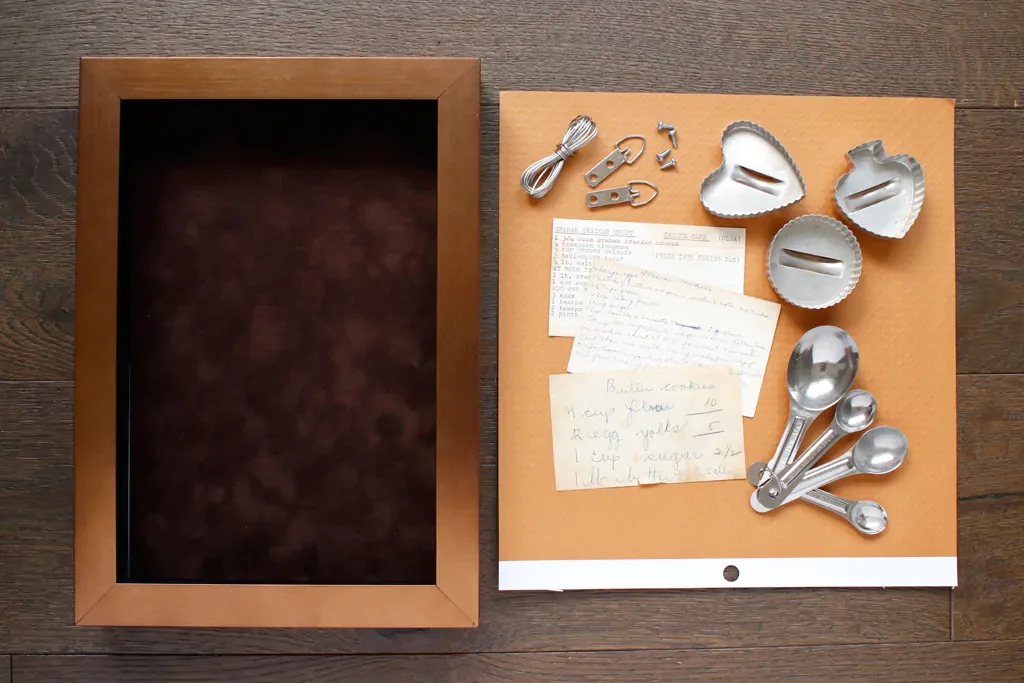
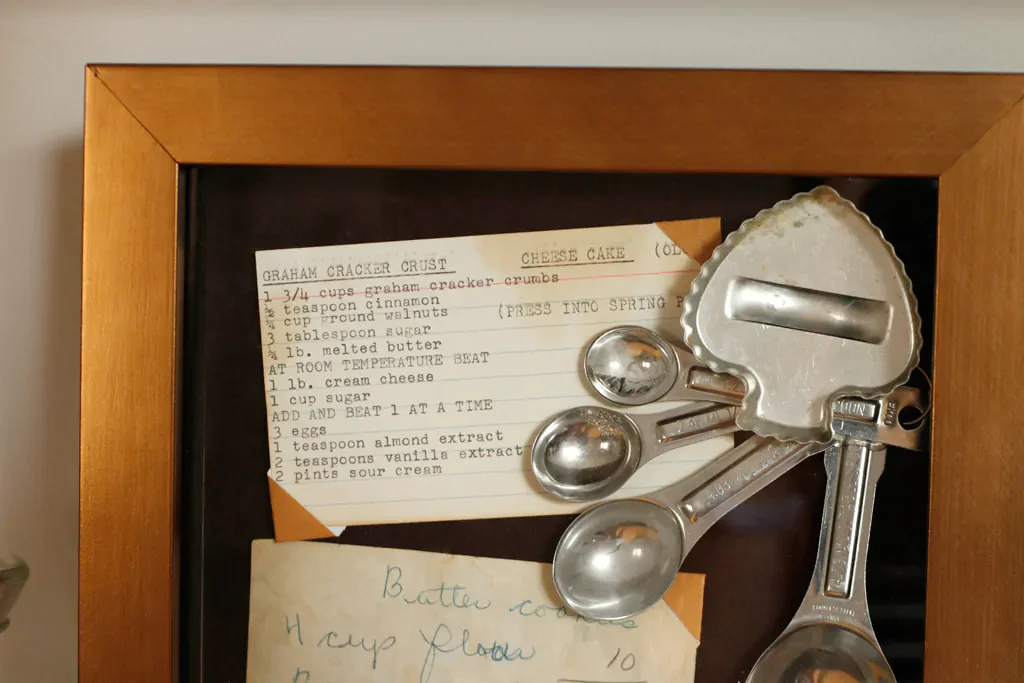
- Outer dimensions: 8x10 or 10x12 (gives the card a generous border)
- Depth: 1 inch (recipe cards are flat; no depth needed beyond glazing clearance)
- Mounting: photo corners on a sub-mat opening, so the card is held without adhesive on its surface
- Backing fabric: cream linen, soft gray linen, or aged-paper-toned mat
- Glazing: framer's grade acrylic (the card will fade in direct light without protective glazing)
- Frame profile: narrow wood, often warm-toned (oak, walnut) to match a kitchen aesthetic
The card sits centered behind the mat opening. The handwriting is visible. The original yellowing of the card (if it was used in a kitchen for decades) shows through and reads as part of the character.
The multi-card collection design
For multiple recipe cards from the same person or from several family members, the shadow box can hold 4 to 9 cards arranged in a grid or curated layout.
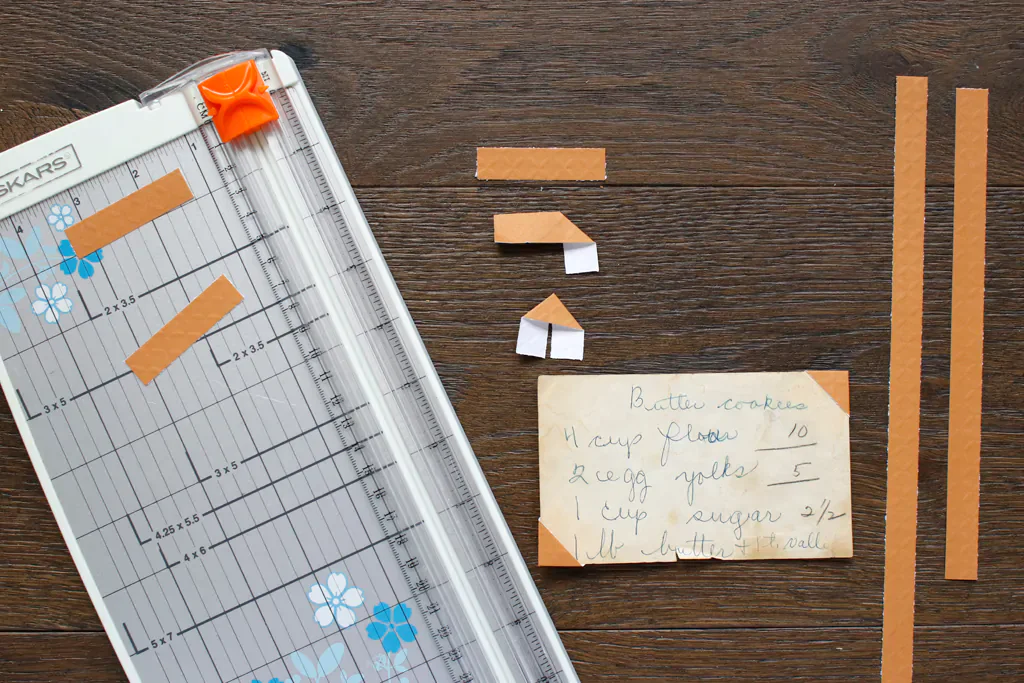
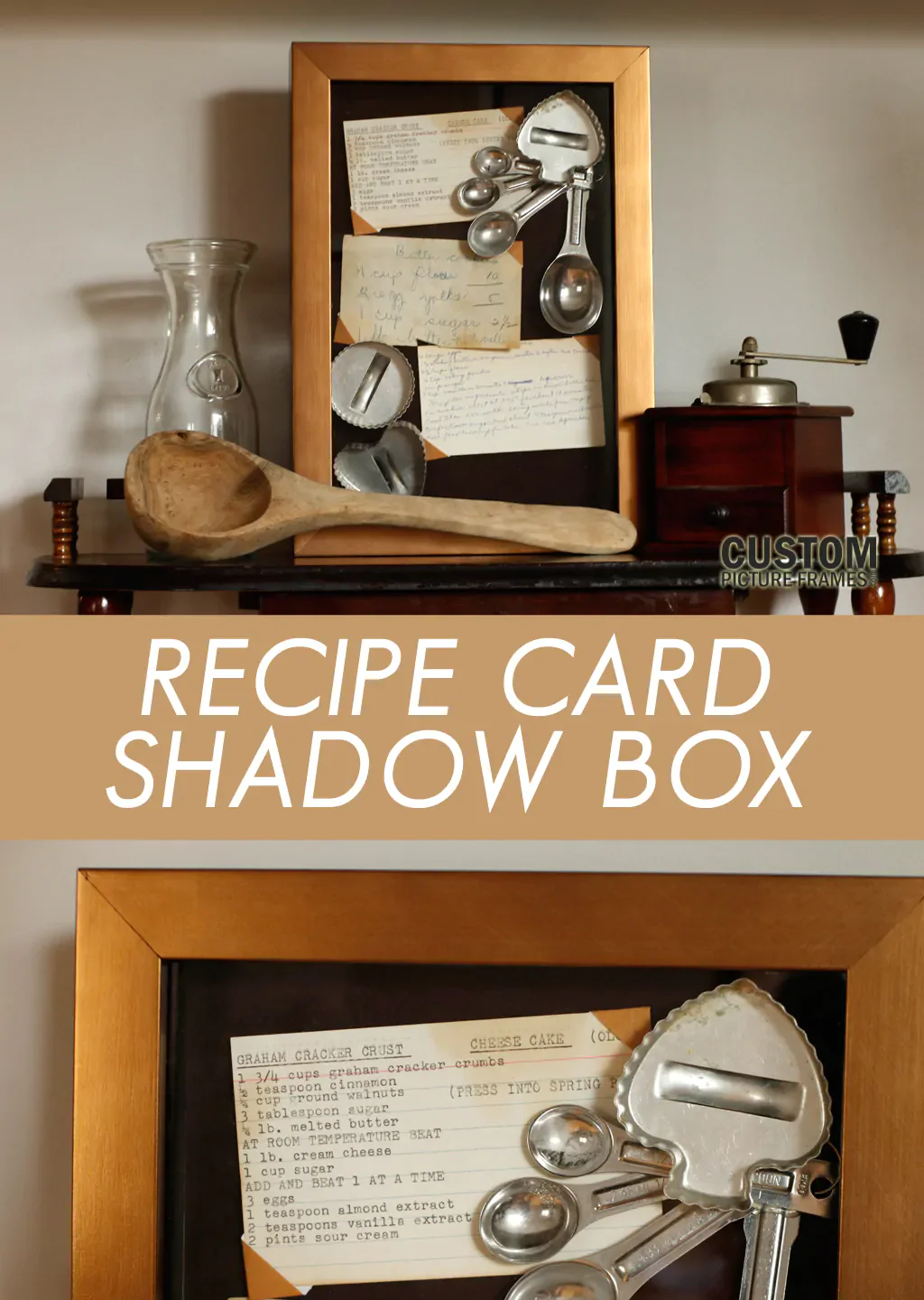
- Outer dimensions: 16x20 to 20x24 depending on card count
- Depth: 1 to 1.5 inches
- Layout: grid with consistent mat openings, or asymmetric with featured cards larger than supporting cards
- Mounting: photo corners on each card, in their respective mat openings
- Backing fabric: linen in cream or a kitchen-warm color
- Glazing: framer's grade acrylic
- Frame profile: wide wood, warm-toned, with enough presence to anchor the collection
Multi-card collections look strongest when the cards have consistent dimensions (all 4x6 or all 3x5). Mixed sizes work but require more careful layout to avoid looking random.
Adding context elements
A recipe card shadow box can include other elements that connect to the recipe or the cook.
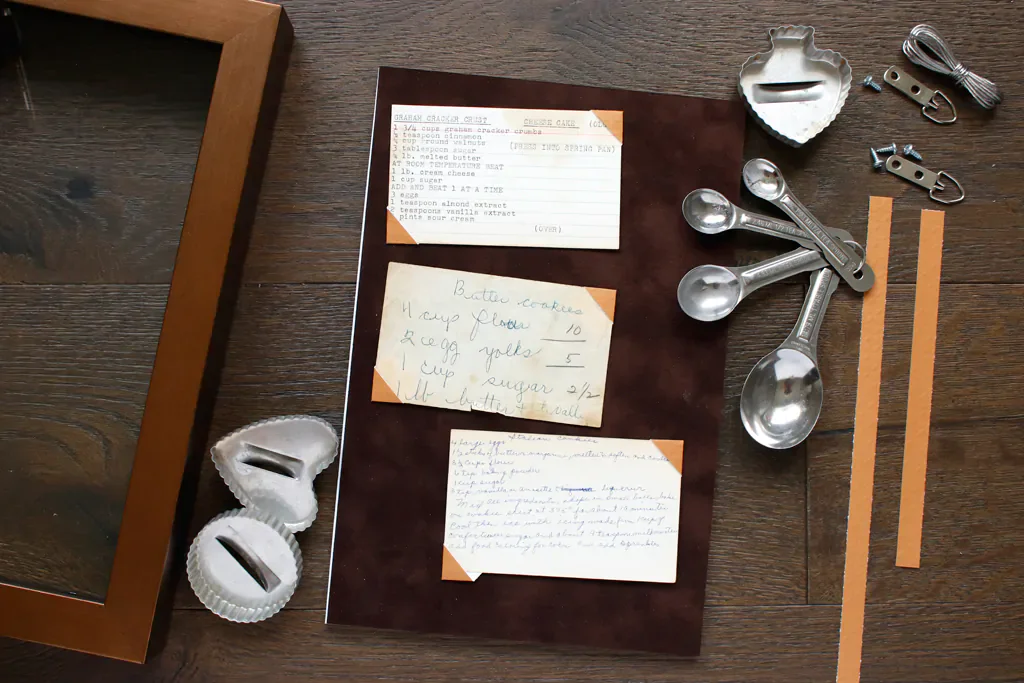
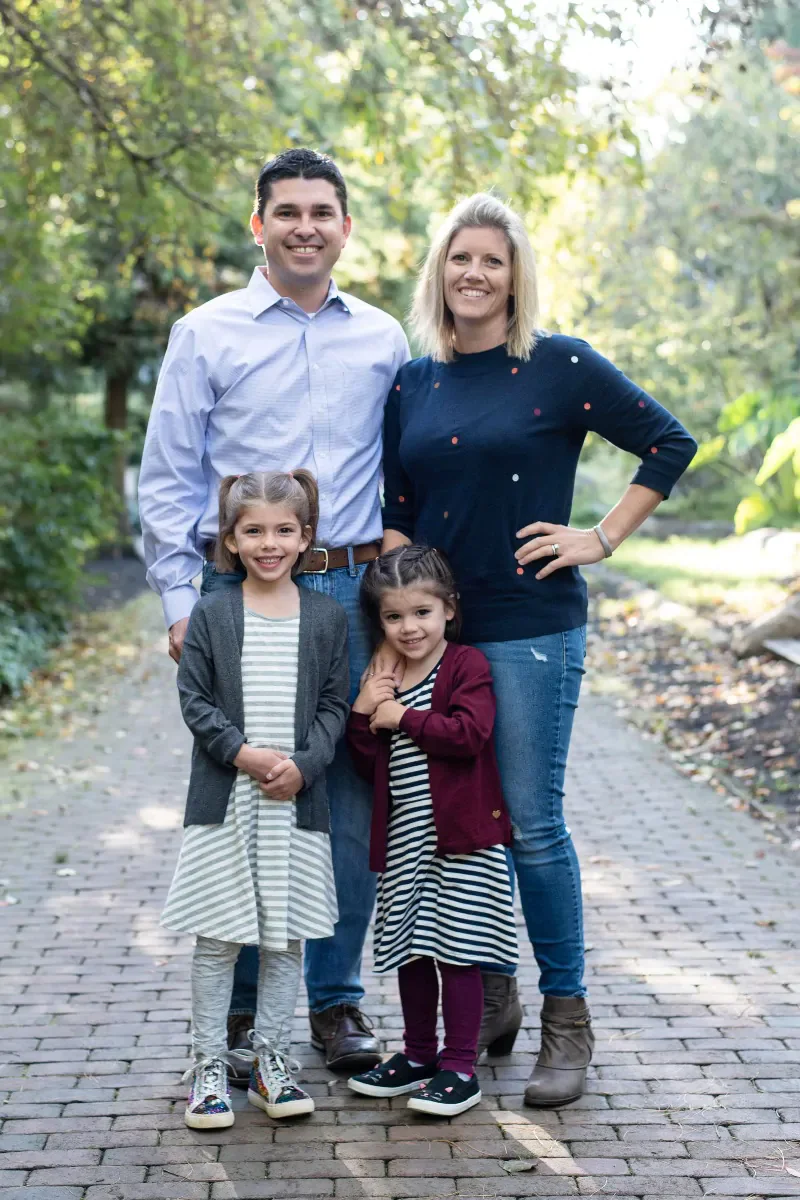
A photograph of the cook. A 4x6 photograph of the grandmother or aunt who wrote the recipe. Mounted alongside the card in its own mat opening. Adds emotional weight and identifies the source.
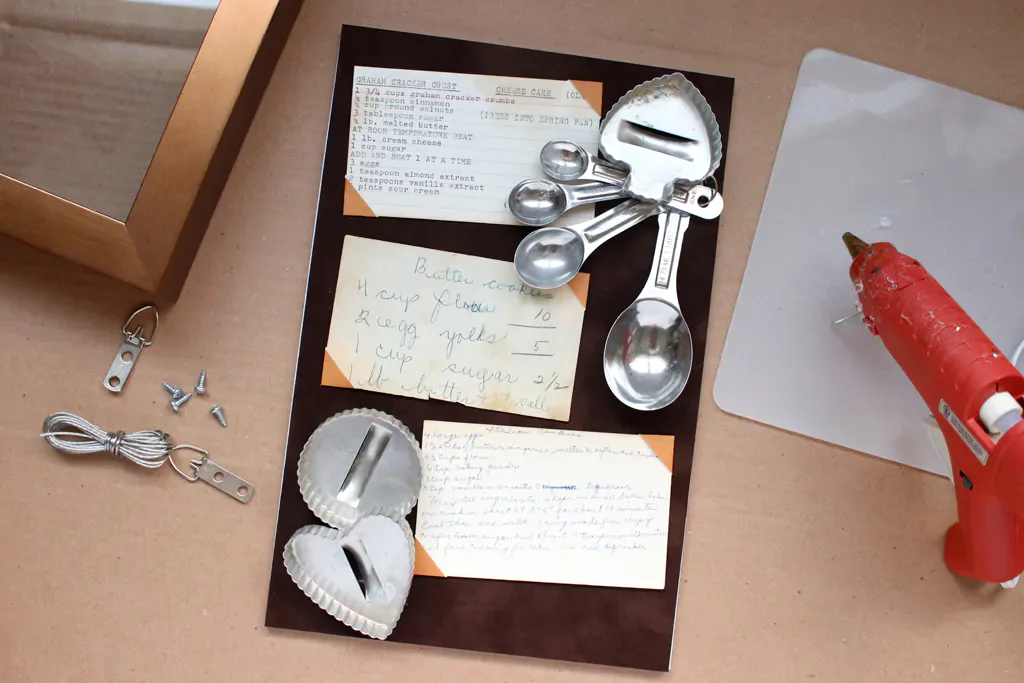
A small kitchen item. A wooden spoon, a measuring spoon, a cookie cutter, a small piece of vintage kitchen apparel (an apron square). Mounted in a sub-section of the shadow box. Adds depth and texture.
A printed final dish photograph. A photograph of the finished recipe (the cookies, the bread, the casserole). Pairs naturally with the card.
A dedication plaque. A small brass or wood plaque with the cook's name and the recipe's name. "Gloria's Banana Bread" or "Mom's Sunday Sauce." Anchors the piece.
For most recipe shadow boxes, the card itself is enough. Two or three supporting elements work; more than four starts to crowd the composition.
Preservation considerations
Recipe cards have specific preservation challenges:
Kitchen yellowing. Cards used in kitchens absorb cooking oils, splatters, and moisture. The yellowing is part of the card's character but the contamination can accelerate paper degradation. Once framed in a sealed shadow box, the contamination stops, but the existing damage is permanent.
Pencil and ink fading. Handwriting in pencil fades over decades. Ballpoint pen ink can fade with light exposure. Fountain pen ink is the most stable. Keeping the framed card out of direct light slows further fading.
Acidic paper. Old recipe cards (from index card boxes, recipe boxes from the 1950s through 1980s) were typically printed on wood-pulp paper with high lignin content. The paper is acidic and continues to deteriorate. Framing in a sealed shadow box with archival mat board slows the deterioration.
Tape damage. Some recipe cards have been taped to other surfaces or repaired with tape over the years. Tape adhesives can stain through paper. If the card has visible tape, a paper conservator can sometimes remove it without damage.
For valuable or irreplaceable cards (a grandmother's only handwritten copy of a family recipe), the framing should use:
- Cotton rag mat board (no acid migration)
- Archival photo corners (no adhesive on the card)
- Framer's grade acrylic glazing
- Buffered foam core backing
- Sealed dust cover
This is conservation framing, not decorative framing. The card outlasts the family.
Frequently asked questions
Can I scan the recipe card and frame the scan instead of the original?
Yes, for cards that are already heavily damaged or for sets where you want to display copies. A high-quality scan printed on archival paper can be framed and looks identical to the original. Keep the original in archival storage. Some families do both: a scanned copy in the kitchen for daily reference, the original framed in a quieter room.
What if the card is double-sided?
A double-sided recipe card needs special handling. Either choose which side to display (typically the side with the recipe name and main ingredients), or use a double-sided shadow box where both sides are visible (rare and expensive, typically a custom build). For most cards, displaying one side is the practical choice.
Should I clean the card before framing?
Light dusting with a soft brush only. Do not wash, do not erase, do not try to lighten yellowing. The condition of the card is part of its history. Cleaning typically damages more than it improves.
Can I add the recipe written out in calligraphy alongside the original card?
Yes, and it's a popular addition. A calligraphed copy of the recipe printed at a larger size (5x7 or 8x10) goes alongside the original 3x5 or 4x6 card. The calligraphy is for reading; the original is for the inheritance.
What size frame for a single card?
For a single 3x5 card, an 8x10 outer frame with the card centered in a 5x7 mat opening reads well. For a single 4x6 card, a 10x12 outer frame with the card centered in a 6x8 mat opening reads well.
Will the recipe still be readable in the frame?
Yes. The card sits behind acrylic but the writing is fully visible. Framer's grade acrylic is clear and lighter than glass, so the writing on a recipe card reads cleanly through it.
The goal is for a recipe card you frame in 2026 to be readable, well-preserved, and on a wall in 2076. Done right, that is what happens.