

How to Install a Canvas in a Floater Frame
Quick answer
To install a canvas in a floater frame, center the canvas inside the frame so the gap (the reveal) is even on all four sides, typically 3/8 to 1/2 inch. Secure the canvas with offset clips or wood screws driven into the back of the stretcher bars from inside the frame channel, never through the canvas face or the painted edge. Use four screws at minimum, one per side, and verify the gap is still even after the canvas is locked in place. Add bumpers and hanging wire after mounting, never before. The full installation walkthrough follows below.
How to Install a Canvas in a Floater Frame: The Right Way to Set the Gap
A floater frame holds a canvas with a visible gap between the canvas and the frame. The gap matters. Here is how to install the canvas so the gap reads even, the canvas stays flat, and the piece holds for the long haul.
A floater frame is a frame that surrounds a stretched canvas without covering its edges. There is a small visible gap between the canvas and the inner edge of the frame, which is what gives the canvas a "floating" appearance. The canvas is mounted to the frame from behind so the front view is clean.
This guide walks through installing a canvas in a floater frame, whether you bought the frame separately or are reframing an existing canvas.
Step-by-Step: Installing a Canvas in a Floater Frame
- The stretched canvas (already on stretcher bars)
- The floater frame, sized to fit the canvas with the desired gap (typically 1/4 to 3/8 inch on all sides)
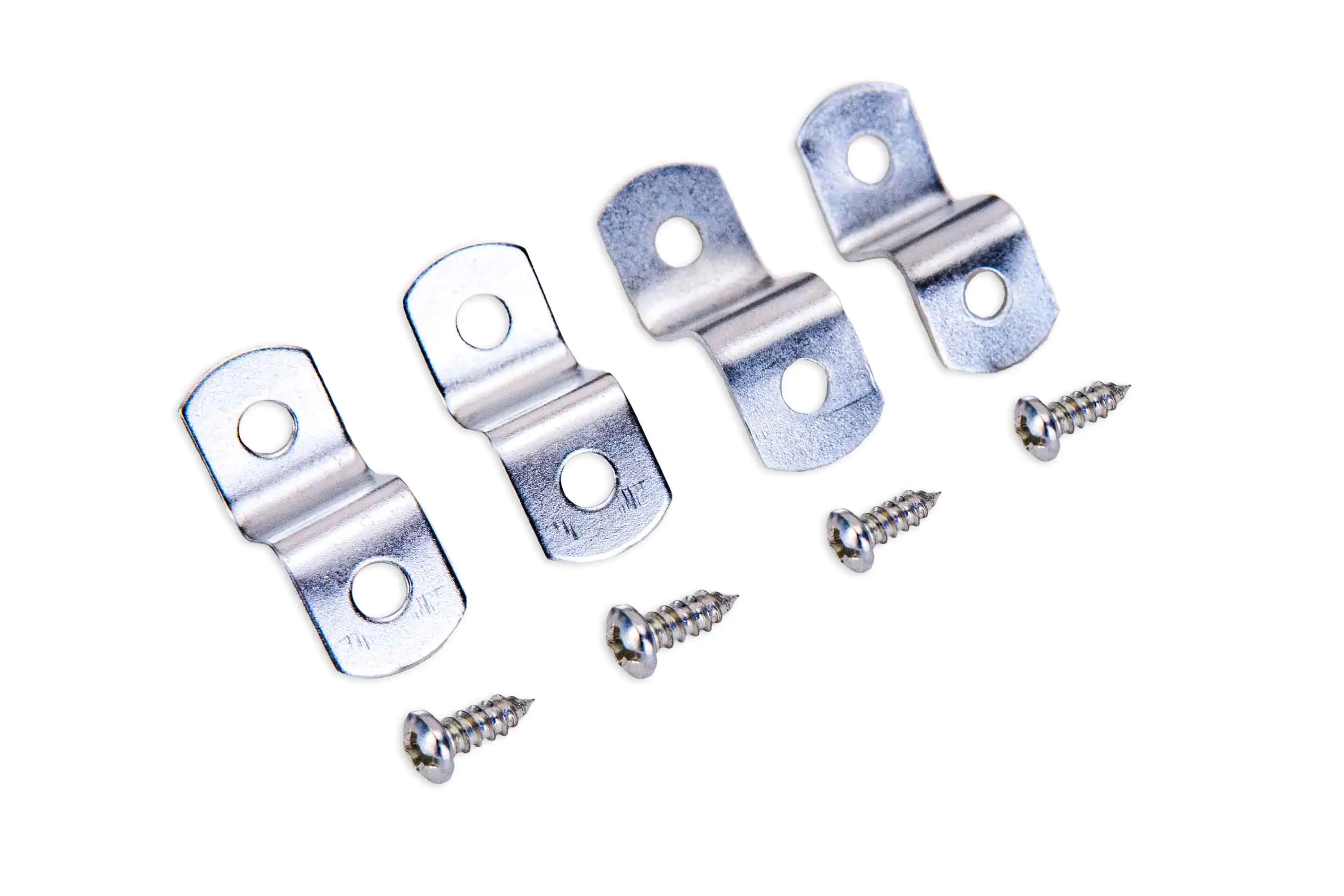
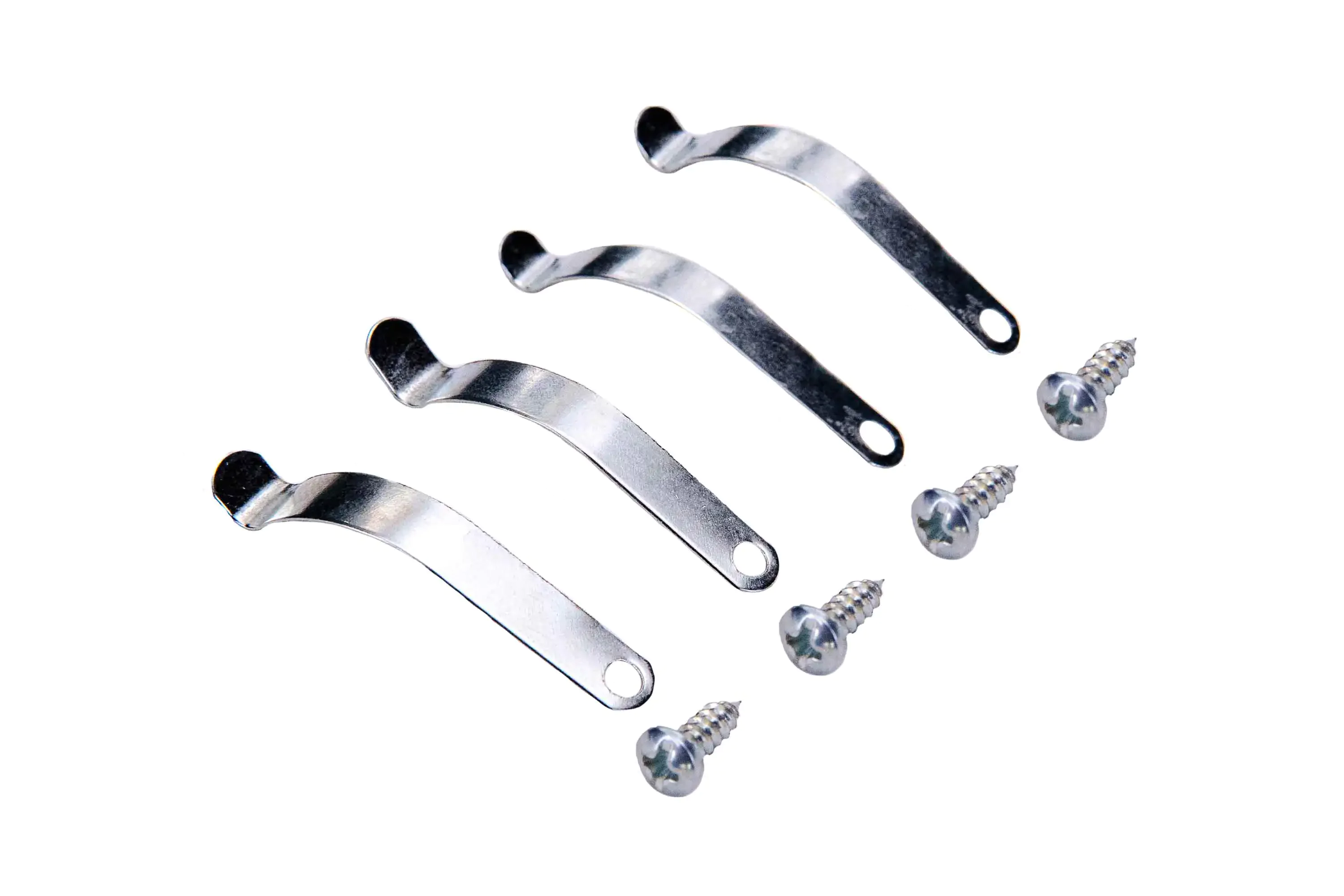
- Mounting hardware: usually 4 to 6 small screws or specialized canvas-mounting brackets
- A small drill or screwdriver
- A measuring tape
The floater frame should be sized so the canvas fits inside with a deliberate gap on all four sides. A 16x20 canvas typically goes in a frame with an inside opening of 16.5x20.5 (1/4 inch gap) or 16.75x20.75 (3/8 inch gap).
The installation
-
Lay the canvas face-down on a clean, padded surface.
-
Center the floater frame face-down over the canvas, aligning so the gap is even on all sides. Use a measuring tape or a small spacer (a piece of cardboard cut to 1/4 inch) to confirm the gap is uniform top-to-bottom and side-to-side.
-
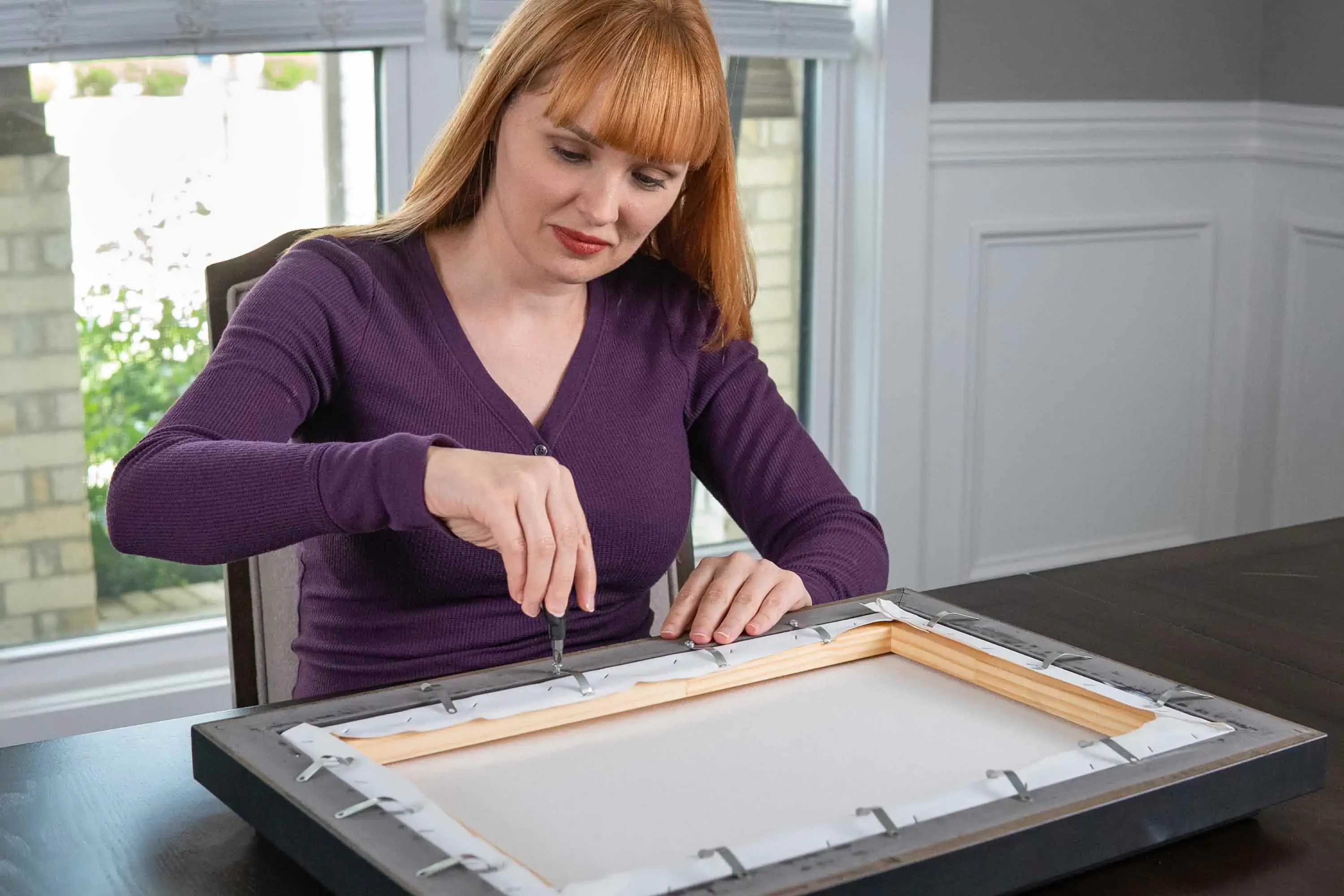
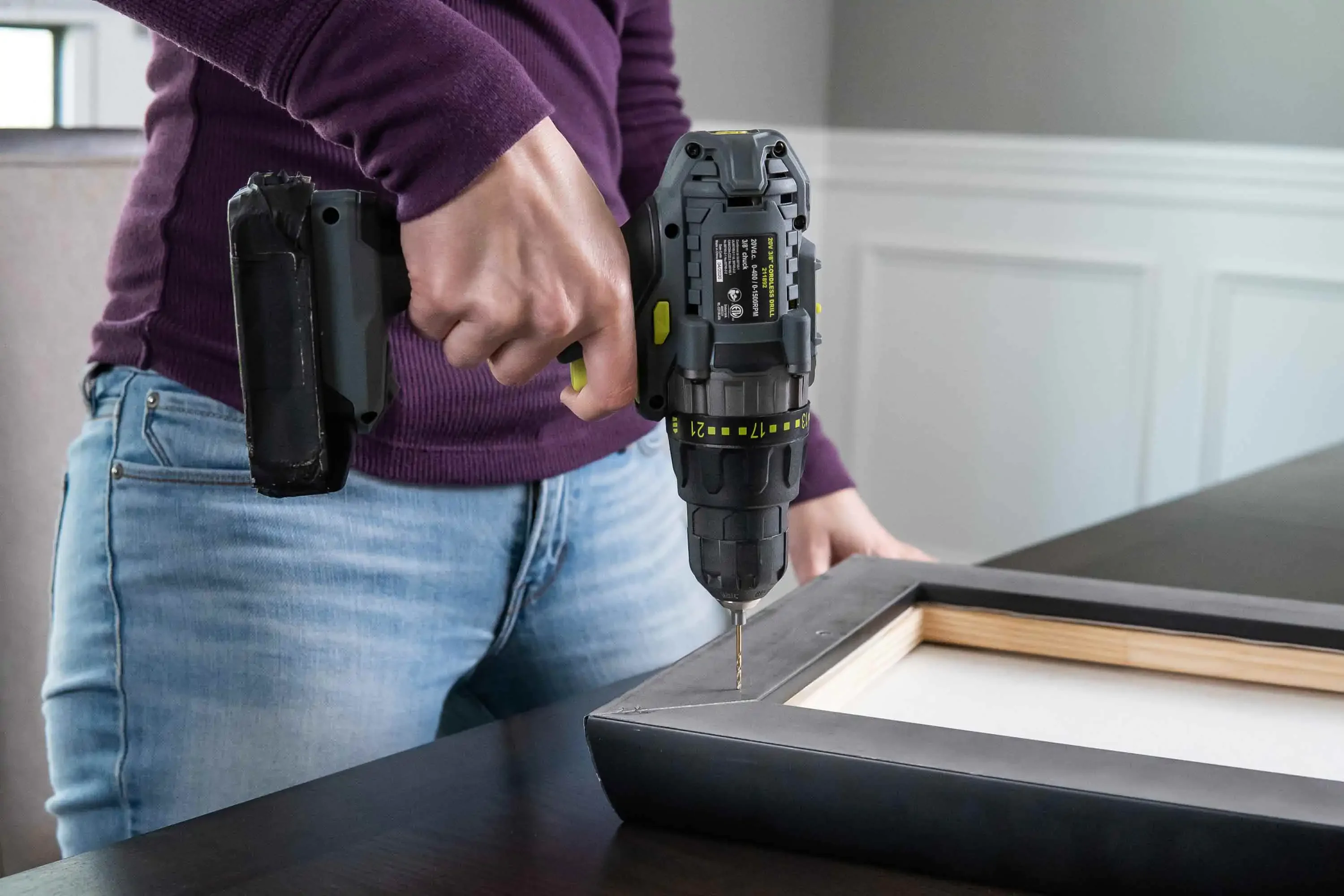
From the back of the canvas, drive screws through the back of the floater frame's inside lip into the back of the canvas's stretcher bars.
-
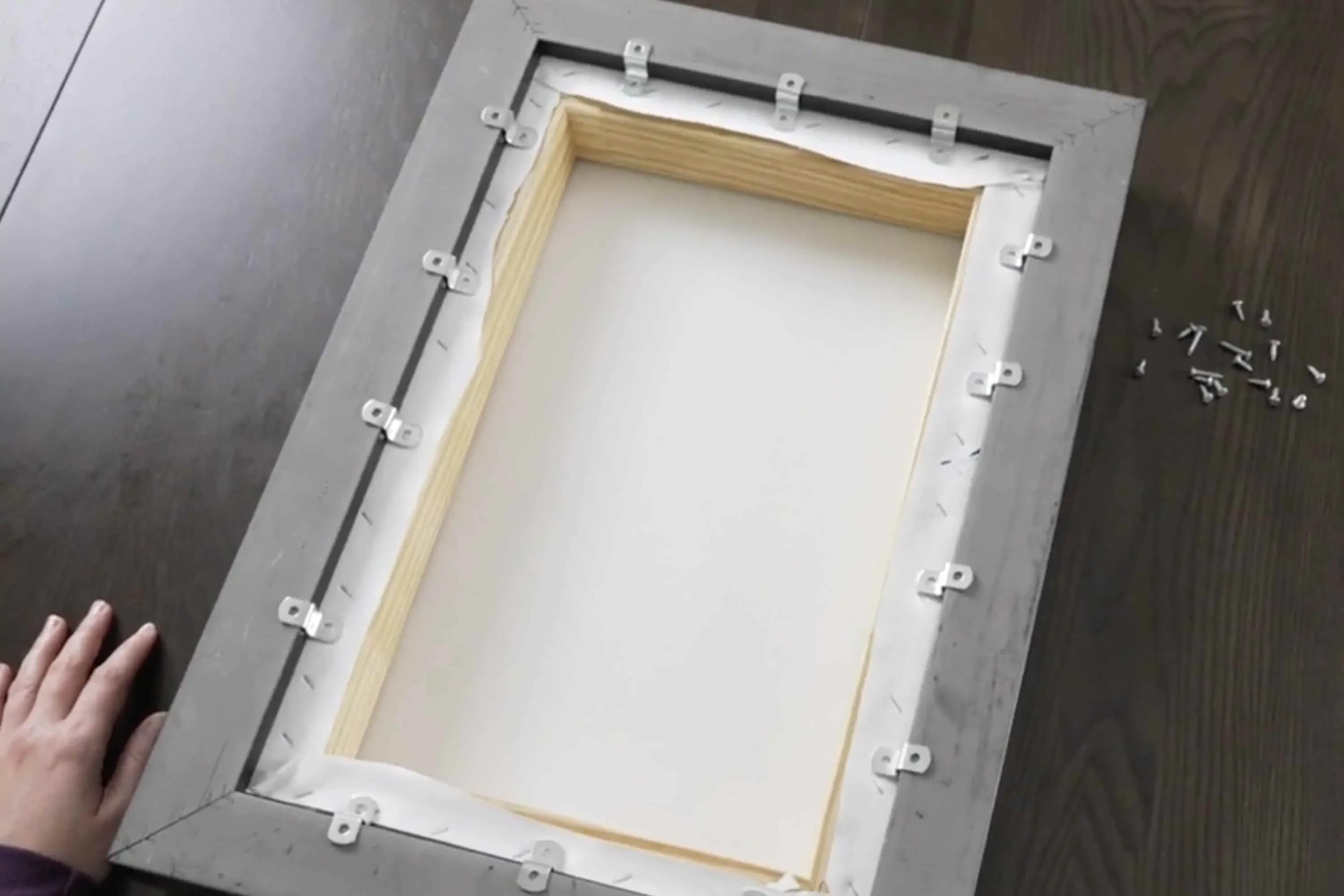
Use 4 to 6 screws total, distributed evenly. For a 16x20 canvas, two screws on the long sides and one on the short sides work well. For larger canvases, increase the count to 8 or 10 screws.
-
After the canvas is screwed in place, flip the frame over to inspect the gap. The gap should be uniform on all sides. If it's off, loosen one or two screws and adjust.
-
Add the appropriate hanging hardware to the back of the floater frame (D-rings with picture wire for most, or French cleats for larger frames).
What can go wrong
Uneven gap. The most common problem. If the gap is wider on one side, the canvas is sitting off-center. Loosen the screws, recenter the canvas, retighten.
Screws too long. A screw that goes through the frame and into the canvas's stretcher bar but pokes out the front of the bar can damage the canvas fabric. Use screws sized to the depth of the frame plus the depth of the stretcher bar but not longer.
Canvas tilted forward. If the canvas surface is not flush with the front of the frame's lip, the canvas may angle outward at the top. Check that the screws are pulling the canvas tight against the frame's mounting lip.
Picking the right floater frame size
The gap between the canvas and the frame is a design choice. Smaller gap (1/4 inch) reads as more contained, more traditional. Larger gap (3/8 to 1/2 inch) reads as more dramatic, more modern.
For a contemporary canvas (abstract, modern photography, large solid-color work), 3/8 inch gap is typical.
For a traditional canvas (oil painting reproduction, classical landscape), 1/4 inch gap is typical.
The frame's outer dimensions are the inside opening plus the frame's profile width on each side. A 16x20 canvas in a frame with 2 inches of profile width all around comes to 20x24 outer dimensions.
Frequently asked questions
Should the canvas sit flush with the front of the frame, or recessed?
Most floater frames are built so the canvas sits 1/8 to 1/4 inch recessed from the front face of the frame. This protects the canvas edge from being touched and casts a small shadow that emphasizes the floating effect.
Can I install a canvas in a floater frame myself?
Yes, with basic tools. The installation takes 15 to 30 minutes once you have the canvas and frame in hand. The hardest part is centering the canvas evenly within the frame.
What if my canvas is slightly larger than the frame's opening?
If the canvas is too tight to fit, the frame is undersized. A 16x20 canvas needs a frame with at least a 16.25x20.25 inside opening, ideally larger. Don't force a tight fit; the canvas will buckle.
Can I switch a canvas from a traditional frame to a floater frame?
Yes. Remove the canvas from the original frame, check that the stretcher bars are square and the canvas tension is good, then install in the floater frame using the steps above.
Will the canvas warp inside a floater frame over time?
Quality stretcher bars (kiln-dried wood with cross-bracing on larger sizes) hold their shape for decades. The floater frame doesn't add or subtract structural support; it provides the visual surround. Canvas warping is a stretcher-bar problem, not a frame problem.
What we ship
We sell floater frames sized to standard canvas sizes plus custom-sized floater frames cut to your specifications. Hardware for mounting the canvas inside the frame is included.
If you bought the canvas from us, we can pre-install it in a floater frame and ship the assembled piece ready to hang. Specify both the canvas and the floater frame at order time.
If you bought the canvas elsewhere and want a floater frame to fit it, send us the canvas's exact dimensions (including the depth of the stretcher bars) and we will size the floater frame to fit with your preferred gap.
The result is a canvas that floats inside the frame with a clean gap, ready to hang.